Children with autism, ADHD or developmental delay — and children who don't yet have a diagnosis, and may never need one. You don't need a referral to start.
Not talking yet, or not being understood
Plays alone, or beside other children rather than with them
Finds it hard to sit, listen, wait or follow a routine
Big reactions to small changes
A kindergarten has said they're struggling to manage
You've been told to wait and see, and you don't want to wait
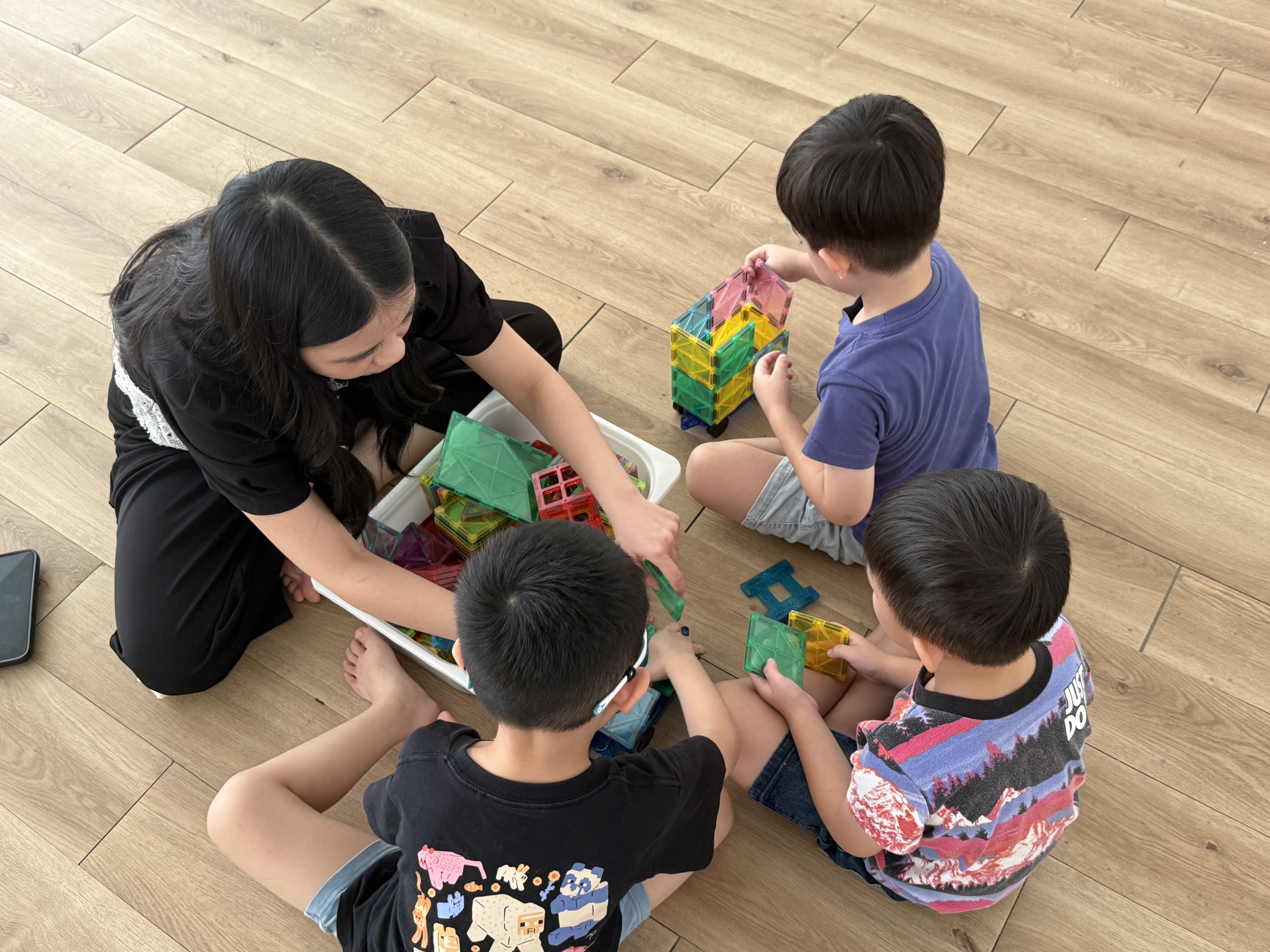
Three children to one of us. Your child gets close attention, and the plan is built around them individually — not around what the group is doing.
A child working on communication needs somebody to communicate with. Joining in, waiting a turn, coping when another child takes the toy — none of that can be practised one to one.
Understanding, expressing, asking for what you need, and being understood by someone who isn't family.
Playing alongside, then playing with. Sharing attention, taking a turn, following another child's idea.
Staying with an activity, following an instruction, and the early thinking skills a classroom builds on.
Coping with a change of plan, managing frustration, and what's driving the behaviour rather than just the behaviour.
Sitting, listening, waiting, lining up, tidying away, and moving between activities without falling apart.
Bag, shoes, snack, toilet — the daily things that decide whether a placement works.

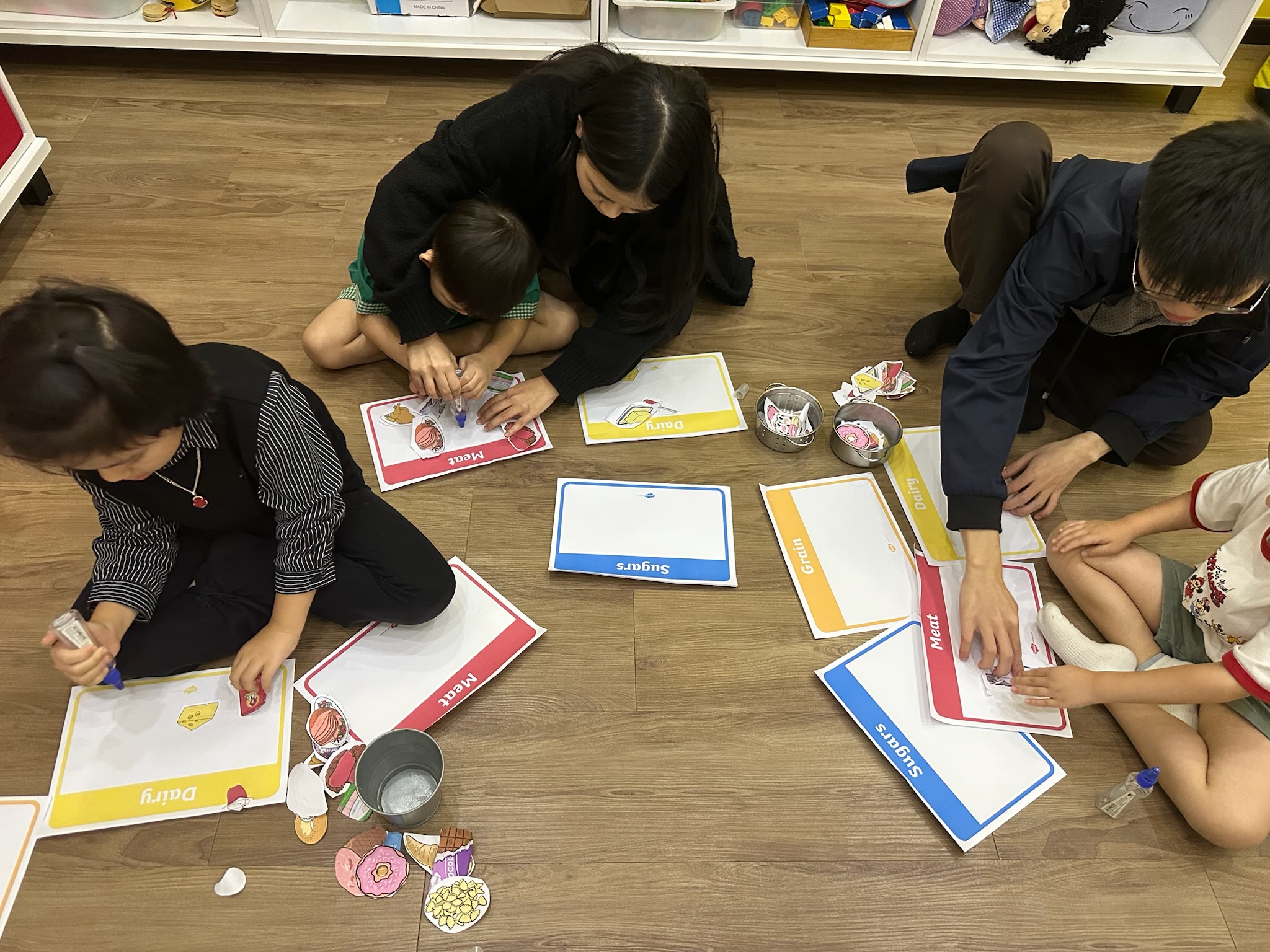
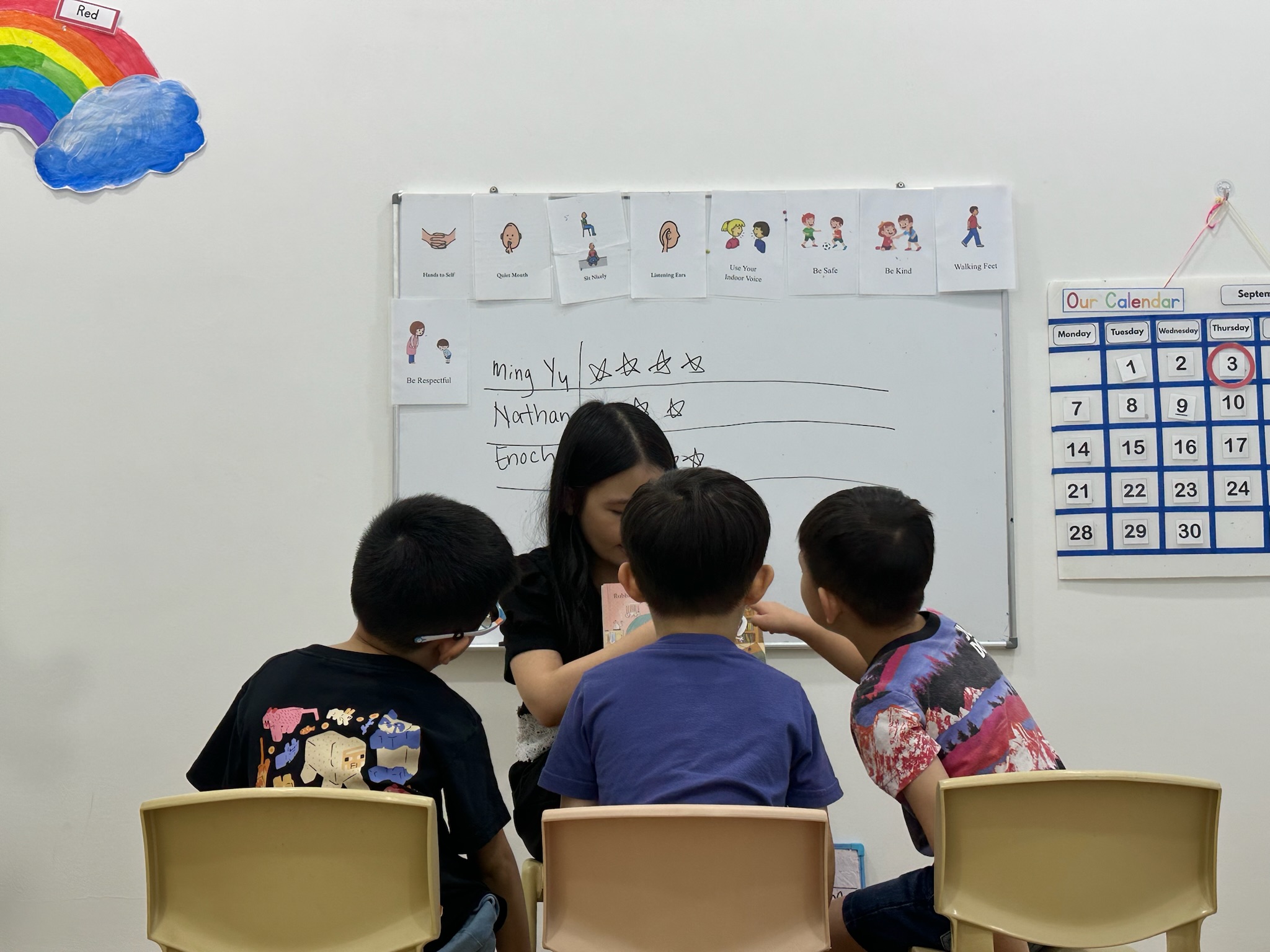
Most programmes are open-ended. Ours is built to finish. We work towards your child joining a kindergarten or school — and we stay involved through the move, because that's where placements usually fail.
Assessment and goalsWe start by understanding your child, then agree the goals with you in writing — specific enough that you'd know if they'd happened.
The programme2–3 hours a session, 2–5 days a week, in a group of three. Progress tracked against the goals and shown to you every three months.
A staged move into schoolWe build the skills a classroom actually asks for, then help your child move into one gradually rather than all at once.
We work with the schoolWith your permission, we share strategies with the teacher, join meetings, and stay available while your child settles.
From RM 2,400 a month
Depending on how many days a week. Everything agreed with you before we begin.
No. Many of the children here don't have one. We don't diagnose either — in Malaysia that sits with paediatricians and doctors, and if we think you should see one, we'll say so and help you get there.
Yes — most of the children in this programme are in school during the morning, and come to us in the afternoon to build the skills that morning is asking of them. We work directly with your child's school, so the two aren't running separately: what we're building here is meant to show up in the classroom, not stay in our room. Some children are still working towards that transition and aren't in a school placement yet — we support that step by step, at their pace.
A child-led approach, so your child is an active partner rather than a passive recipient — combined with the structure of ABA principles and techniques, and a strengths-based lens throughout. In practice, that means we first build the skills your child is missing — the actual blockage to learning — and use ABA-informed strategies specifically for behaviour that's getting in the way. We start with what your child can already do, not just what they can't.
Goals are agreed with you in writing at the start, and we formally review progress against them every three months. You'll always know where things stand — and if something isn't working, we'll say so and change it rather than waiting for the next review.
It genuinely depends on the child — their starting point, their progress, and how closely we, you and the school are able to work together. Some children move through more quickly, some need longer, and we won't put a number on it just to give you a tidy answer. What we can promise is that we're reviewing this with you every three months, not leaving you to wonder.
A trained interventionist, working under the supervision of a lead interventionist and an educational psychologist. Your child has a consistent person they see each session, and that person's work is overseen at two levels above them — it isn't left to one individual's judgement alone.
Tell us your child's age, what you're noticing, and what you'd like help with. We'll tell you honestly which programme fits — including if the answer is none of them.
Confident. Capable. Independent learners.